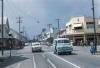
MAURITIUS IS IN AFRICA. SO WHY DOES INDIA FEEL SO DEEPLY ROOTED THERE?
Mauritius is one of those countries where explaining the family tree might require a whiteboard. ?
Because Africa and India did not simply meet there on a map.
They met at work.
They met in neighborhoods.
They met in markets.
And eventually, they met inside families.
But here is the part the beautiful tourism photos rarely explain:
Love sometimes crossed Mauritius’s ethnic boundaries faster than society did.
Mauritius had no Indigenous human population before settlement.
Under European colonial rule, enslaved Africans and Malagasy people were brought to the island.
Then, after the abolition of slavery, another enormous migration transformed Mauritius.
Beginning in 1834, the British used Mauritius as the first major site of what became known as the “Great Experiment” in indentured labor.
Between 1834 and 1920, roughly half a million Indian indentured laborers passed through Aapravasi Ghat, many entering Mauritius’s sugar economy. (UNESCO World Heritage Centre)
Suddenly, this small African island contained communities whose ancestral stories stretched toward Africa, Madagascar, India, China and Europe.
And human beings did what human beings have always done.
They interacted.
They borrowed from one another.
They argued.
They fell in love.
Some married across communal lines.
Some families accepted it.
Others absolutely did not.
Because Mauritius may have been culturally mixing, but that did not mean every family was ready for their son or daughter to marry outside the community.
Research on Mauritian society shows that intermarriage has occurred across communal boundaries while also historically facing resistance because religion, ancestry, caste, class and community identity remained important. Children of mixed marriages could even come to be socially identified as Creole, showing just how complicated Mauritian identity became. (Springer)
Think about that.
People could share an island.
Share a language.
Share food.
Share neighborhoods.
And still hesitate to share a son or daughter.
That is not uniquely Mauritian.
That is painfully human.
And sometimes those divisions became much more serious.
Around independence, Mauritius experienced periods of communal tension and violence. In January 1968, only weeks before independence, deadly clashes erupted in Port Louis, particularly between Creole and Muslim communities amid political uncertainty, local rivalries and communal tensions. (Cambridge University Press)
But even there, history refuses to give us a simple story about two groups hating one another.
Accounts from the violence also describe Muslim families protecting Christian Creole neighbors and helping people from another community escape danger. (Mauritius Mag)
That matters.
Because Mauritius was never simply:
“Africans versus Indians.”
“Hindus versus Christians.”
“Muslims versus Creoles.”
Real life is rarely that lazy.
The same communities capable of tension also produced friendships, shared culture, mixed families and generations of people whose very existence complicated the boundaries.
That may be the most fascinating thing about Mauritius.
The island did not become multicultural because everyone forgot where they came from.
They remembered.
Sometimes fiercely.
But generation after generation still had to figure out how to build ONE COUNTRY together.
And somewhere between slavery, indenture, colonialism, resistance, migration, marriage and independence, something distinctly Mauritian emerged.
African.
Indian.
European.
Chinese.
Creole.
And yet not completely reducible to any one of them.
Mauritius reminds us of something history keeps trying to teach:
Borders can separate continents.
Society can create categories.
Families can defend traditions.
But human beings have an inconvenient habit of falling in love across the lines we draw.
Africa and India did not simply meet in Mauritius.
Sometimes…
they became family.
#Mauritius #AfricanHistory #IndianDiaspora
Mauritius is one of those countries where explaining the family tree might require a whiteboard. ?
Because Africa and India did not simply meet there on a map.
They met at work.
They met in neighborhoods.
They met in markets.
And eventually, they met inside families.
But here is the part the beautiful tourism photos rarely explain:
Love sometimes crossed Mauritius’s ethnic boundaries faster than society did.
Mauritius had no Indigenous human population before settlement.
Under European colonial rule, enslaved Africans and Malagasy people were brought to the island.
Then, after the abolition of slavery, another enormous migration transformed Mauritius.
Beginning in 1834, the British used Mauritius as the first major site of what became known as the “Great Experiment” in indentured labor.
Between 1834 and 1920, roughly half a million Indian indentured laborers passed through Aapravasi Ghat, many entering Mauritius’s sugar economy. (UNESCO World Heritage Centre)
Suddenly, this small African island contained communities whose ancestral stories stretched toward Africa, Madagascar, India, China and Europe.
And human beings did what human beings have always done.
They interacted.
They borrowed from one another.
They argued.
They fell in love.
Some married across communal lines.
Some families accepted it.
Others absolutely did not.
Because Mauritius may have been culturally mixing, but that did not mean every family was ready for their son or daughter to marry outside the community.
Research on Mauritian society shows that intermarriage has occurred across communal boundaries while also historically facing resistance because religion, ancestry, caste, class and community identity remained important. Children of mixed marriages could even come to be socially identified as Creole, showing just how complicated Mauritian identity became. (Springer)
Think about that.
People could share an island.
Share a language.
Share food.
Share neighborhoods.
And still hesitate to share a son or daughter.
That is not uniquely Mauritian.
That is painfully human.
And sometimes those divisions became much more serious.
Around independence, Mauritius experienced periods of communal tension and violence. In January 1968, only weeks before independence, deadly clashes erupted in Port Louis, particularly between Creole and Muslim communities amid political uncertainty, local rivalries and communal tensions. (Cambridge University Press)
But even there, history refuses to give us a simple story about two groups hating one another.
Accounts from the violence also describe Muslim families protecting Christian Creole neighbors and helping people from another community escape danger. (Mauritius Mag)
That matters.
Because Mauritius was never simply:
“Africans versus Indians.”
“Hindus versus Christians.”
“Muslims versus Creoles.”
Real life is rarely that lazy.
The same communities capable of tension also produced friendships, shared culture, mixed families and generations of people whose very existence complicated the boundaries.
That may be the most fascinating thing about Mauritius.
The island did not become multicultural because everyone forgot where they came from.
They remembered.
Sometimes fiercely.
But generation after generation still had to figure out how to build ONE COUNTRY together.
And somewhere between slavery, indenture, colonialism, resistance, migration, marriage and independence, something distinctly Mauritian emerged.
African.
Indian.
European.
Chinese.
Creole.
And yet not completely reducible to any one of them.
Mauritius reminds us of something history keeps trying to teach:
Borders can separate continents.
Society can create categories.
Families can defend traditions.
But human beings have an inconvenient habit of falling in love across the lines we draw.
Africa and India did not simply meet in Mauritius.
Sometimes…
they became family.
#Mauritius #AfricanHistory #IndianDiaspora